How to Identify a Painting From a Photo: 7 Methods That Actually Work
Whether it’s on a museum wall, in an old photo, or hanging in a thrift store, here’s how to put a name, an artist and a date to a painting, and what to do when the obvious tricks fail.
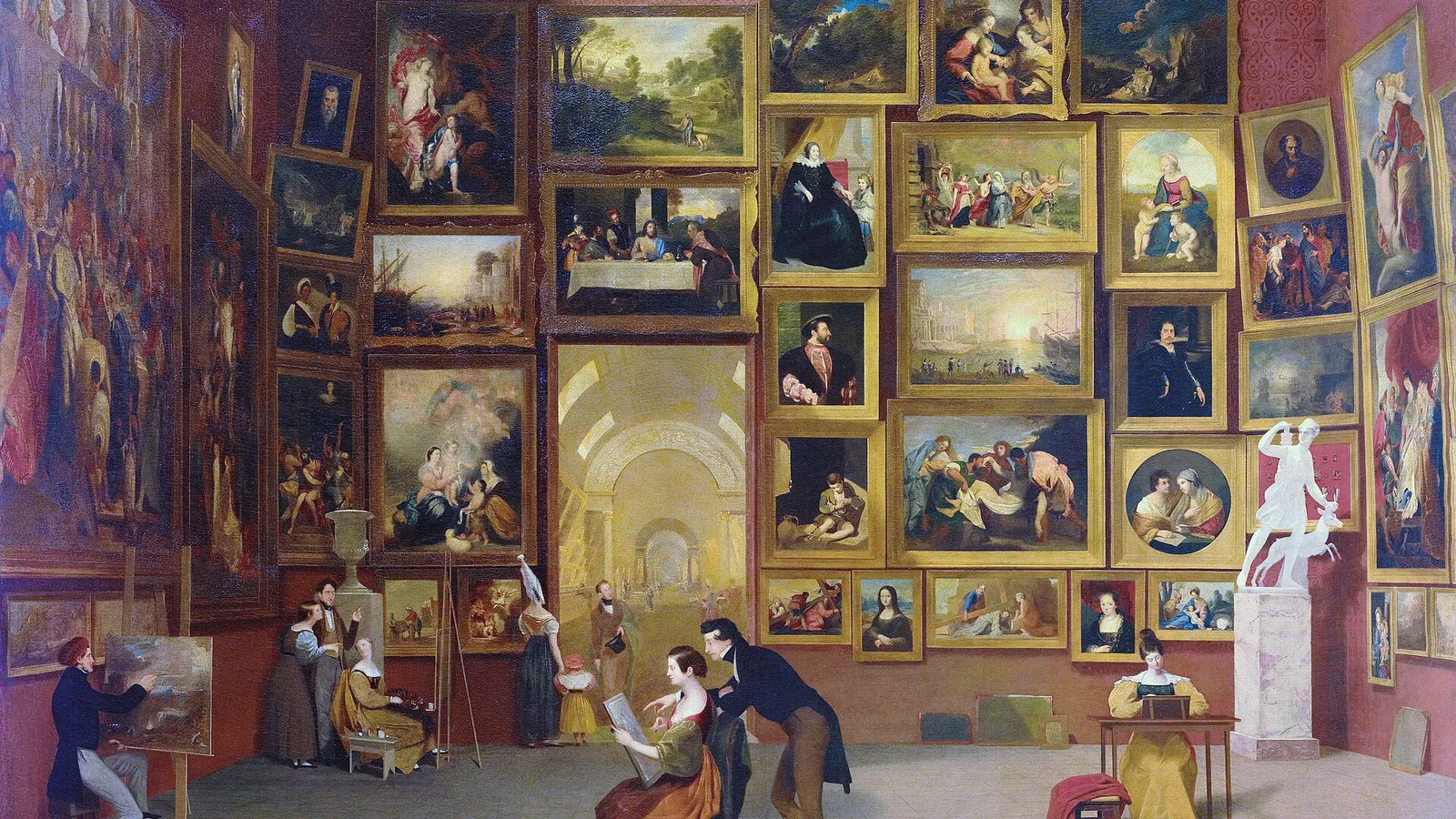
If you’re standing in front of it, read the wall label, or photograph it with an art recognition app. If you only have a photo, run a reverse image search (Google Lens, then TinEye and Bing), cropped tightly to the painting. If that finds nothing, look for a signature and labels on the back, describe the image in words to a search engine or an art database, and ask an expert community.
Most paintings people want to identify fall into one of three situations, and each calls for a different first move:
- A famous or museum painting you saw in person or online. These are easy: almost any visual search will find them.
- A detail, a copy, or a lesser-known artist’s work. Visual search starts to miss, and you need labels, databases and some detective work.
- A painting you own or found, in an attic, an estate sale or a thrift store. These are usually not online at all, so the back of the canvas and expert eyes matter more than search engines.
Below are seven methods, ordered from fastest to most thorough. Most identifications are solved by the first three.
1. Read the museum label properly
It sounds obvious, but wall labels carry more than the title, and the part most people skip is the most useful. A typical label gives you:
- Artist, often with life dates and nationality. Watch for qualifiers: “Workshop of”, “Circle of”, “Follower of” and “After” all mean the named artist did not paint it. “Attributed to” means scholars think so but aren’t certain.
- Title and date. Titles of older works were often given later by cataloguers, so the same painting can appear under several names online.
- Medium and support, such as “oil on canvas” or “tempera on panel”.
- Credit line, which tells you how the museum acquired it.
- Accession number, a code like
29.100.5at the Met orSK-C-5(The Night Watch) at the Rijksmuseum.
The accession number is the single best identifier for a museum work. Search the museum’s online collection for it, or search the web for the number with the museum’s name, and you’ll land on the official record with high-resolution images, provenance and further reading. Take a photo of the label every time. It saves a lot of guesswork later.
2. Use reverse image search, and use it well
Reverse image search compares your photo against images already indexed on the web. It works brilliantly for famous paintings, which appear on thousands of pages, and poorly for anything rarely photographed.
The three worth trying, in order:
| Tool | Best for | Watch out for |
|---|---|---|
| Google Lens | Famous works, quick answers on your phone | Results dominated by posters and prints for sale |
| TinEye | Finding every copy of a specific image, and the oldest or largest version | Only finds copies of that image, not other photos of the same painting |
| Bing Visual Search | A second opinion with a different index | Similar shopping noise to Lens |
A few habits make a big difference:
- Crop to the painting. Cut out the frame, the wall and the people. The search engine should see only the picture surface.
- Straighten it. A photo taken from below or the side distorts the composition. Most phone editors have a perspective tool; use it before searching.
- Search a detail if the whole fails. A distinctive face, animal or building in the painting can match even when the full composition doesn’t, especially for crowded scenes.
- Sort TinEye by “Oldest”. The earliest appearance of an image online is often a museum, auction house or scholarly page with the real title and attribution.
Treat the first result as a lead, not an answer. A match on a print-shop page tells you what the shop called it, which is often wrong. Confirm it on a museum, auction or catalogue raisonné page before you rely on it.
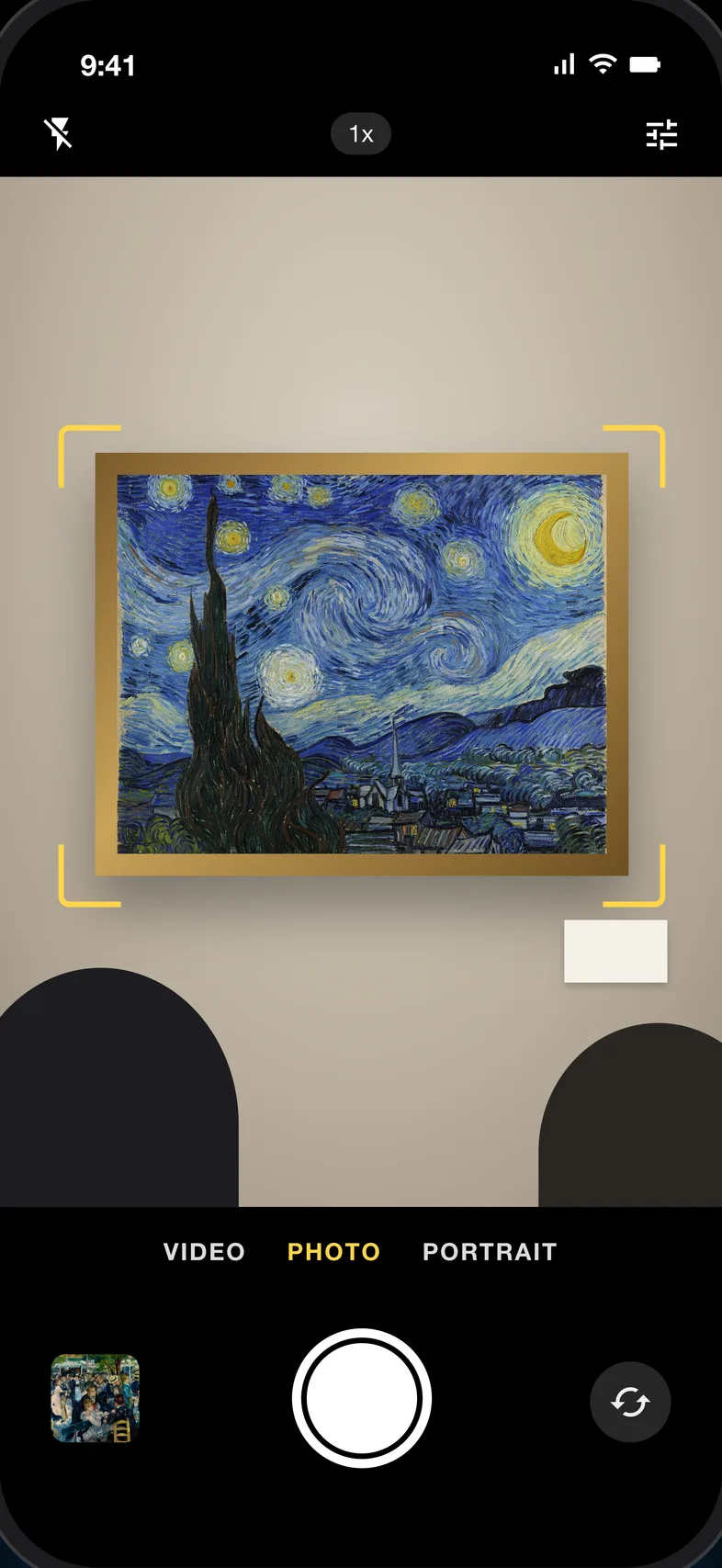
3. Use an art recognition app when you’re in front of it
General-purpose visual search is built for products, landmarks and plants. Art recognition apps are built for one job: you point your phone at a work, and they match it against a catalogue of artworks rather than the whole web. That has two practical advantages in a museum. They tolerate the things that ruin a normal search, like gilt frames, reflections from the glass, and visitors walking through the shot. And they return the work itself, with the artist, date and where it hangs, instead of a page of posters.
Coverage is the thing to check. Some apps only recognize works in museums that have partnered with them. Others cover public collections worldwide. Either way, a good app should show you how confident it is and offer close alternatives when it isn’t sure, rather than presenting a guess as fact.
For a better result from any app: shoot straight on, fill most of the frame with the work, turn off the flash (it causes glare, and most museums ban it anyway), and step to one side if the overhead lights are reflecting in the varnish or glass.
4. Look for a signature, monogram or inscription
When visual search comes up empty, the painting itself may tell you who made it.
- Check the corners first, especially bottom right and bottom left. Signatures are often small, dark and painted into a shadow, so use your phone’s torch at a low angle.
- Monograms (interlocking initials) are common on prints and older paintings. Albrecht Dürer’s “AD” is the best-known example.
- Dates are sometimes painted next to the signature, which narrows things quickly.
- Inscriptions on the front can be the sitter’s name, age, or a motto, all of which are searchable.
Two cautions. A signature is not proof: they were added to unsigned works for centuries to raise their price. And a famous name on a painting from a thrift store is far more likely to be a copy, a print, or a different painter with the same surname than a lost masterpiece.
5. Turn the painting over
For a painting you own, the back often says more than the front. Look for:
- Gallery and dealer labels, which name the artist and sometimes the title and stock number. A dealer’s label can be searched to find the gallery’s records.
- Exhibition stickers, which mean the work was shown publicly and may appear in a catalogue.
- Auction house stencils and lot numbers. Major auction houses publish past sales, and a lot number plus a sale date can lead you straight to the catalogue entry.
- Canvas and stretcher stamps. Artists’ suppliers stamped their canvases, and these stamps can help date a painting even when they don’t name the artist.
- Handwritten notes, such as a title, a name, an address, or a family note on who it was bought from.
Photograph everything you find, front and back, in good light. You’ll need these photos for the next two steps.
6. Describe it in words and search the databases
When there’s no image match and no label, words work surprisingly well. Search for what’s depicted, the style, and your best guess at the period: “oil painting woman in blue dress reading letter by window Dutch 17th century” is far more effective than “old painting of a woman”.
Then try the large open art databases, which you can search by subject, artist, date and place:
- Museum collections online. The Metropolitan Museum, the Rijksmuseum, the Art Institute of Chicago and the National Gallery of Art all have searchable collections with open-access images.
- Art UK, which catalogues the paintings in public collections across the United Kingdom, including many by lesser-known artists that appear nowhere else online.
- RKD, the Netherlands Institute for Art History, the reference database for Dutch and Flemish artists and their works.
- Wikidata and Wikimedia Commons, where millions of artworks are described with structured data: depicted subjects, artists, collections and dates.
If you know roughly where the painting came from, searching that region’s museums first is often the fastest route.
7. Ask people who know
When everything else fails, human expertise is remarkably good at this. Communities such as Reddit’s r/WhatIsThisPainting identify an impressive number of obscure works, often within hours. You’ll get better answers if your post includes:
- A straight-on photo of the whole painting, without the frame cropped off.
- Close-ups of any signature, monogram or inscription.
- A photo of the back, with every label and stamp legible.
- The size, the medium if you know it, and where you found it.
For a painting that might be valuable, go to a professional. Auction houses offer free valuations from photos, and a specialist in the right period will recognize a hand, a workshop or a school far faster than any search.
Why identification fails, and what to try next
If you’ve tried the methods above and still have nothing, it’s usually for one of these reasons:
- It’s a detail. Your photo shows part of a larger work, and search engines compare whole images. Search the most distinctive detail, or think about what larger scene it might belong to.
- It’s a copy or a variant. Many famous compositions exist in several versions by the artist, the workshop and later copyists. A near-match may be the right composition but the wrong painting.
- It’s mirrored or recolored. Reproductions are sometimes flipped or heavily color-shifted. Try flipping your photo horizontally before searching again.
- It simply isn’t online. Most paintings ever made have never been photographed for a public database. For these, the back of the canvas and expert eyes are the only route.
Identifying a painting is often a chain: an image search gives you a style, the style gives you a period, the label on the back gives you a dealer, and the dealer gives you a name. Keep notes as you go, and you’ll usually get there.
Frequently asked questions
Can Google Lens identify paintings?
Yes, for well-known works. Lens is good at famous paintings that appear on thousands of web pages. It struggles with lesser-known artists, details of larger works, and paintings photographed at a steep angle, and its results are often crowded with prints for sale.
How do I find the artist of a painting with no signature?
Start with the back of the painting: gallery labels, exhibition stickers, framer’s stamps and inscriptions often name the artist or the dealer who sold it. Then try a reverse image search, describe the scene in words alongside the likely period, and post clear photos of the front, back and any marks to an expert community.
How can I tell if a painting is an original or a print?
Look closely with a magnifying glass. A regular pattern of tiny dots means a printed reproduction. Brushstrokes that catch the light when you tilt the painting, paint that sits on top of the canvas weave, and uneven edges where the paint stops all suggest an original. High-quality inkjet prints with added texture are harder, so ask an expert if it matters.
What is the fastest way to identify a painting in a museum?
Read the wall label, which gives the artist, title, date and an accession number. If there is no label, or you want to know more, an art recognition app gives you the work and its background from a single photo.
Early access
Take Opus on your next trip.
Know what you’re looking at from a photo, then find the masterpieces, hidden gems and exhibitions near you. We’re letting testers in now.